
09.12.2021
Food sterilization with UV light is a procedure known as irradiation, which, despite the name, does not add radiation to food or render it radioactive in any manner. Food irradiation is a perfectly safe method of sanitizing food using UV lamps that emit UVC wavelengths.
UVC light, especially in the 254 nanometer (nm) range, has been shown to rapidly kill dangerous microorganisms such as numerous bacteria and viruses. UVC lamps are used in a variety of germicidal applications, including surface, air, and water sterilization.
Germicidal lamps are beneficial to any surface sterilization procedure since UVC radiation that penetrates any surface has been shown to be efficient at destroying numerous bacteria, viruses, and dangerous pathogens. UV surface sterilization is more efficient when the surface is clean and free of dirt and debris, which can prevent UV radiation from reaching hazardous bacteria completely. Surface sterilization is a highly effective way to increase the safety of employees and customers in restaurants and kitchens. Surface sterilization has a number of applications in the food preparation industry, including:

UVC germicidal lamps provides several advantages to restaurants through food irradiation, an FDA-approved method of sterilizing food and assisting in the prevention of foodborne diseases. UV lights may also be used to purify the air in businesses and sterilize surfaces in places like food storage spaces, freezers, and kitchen equipment.
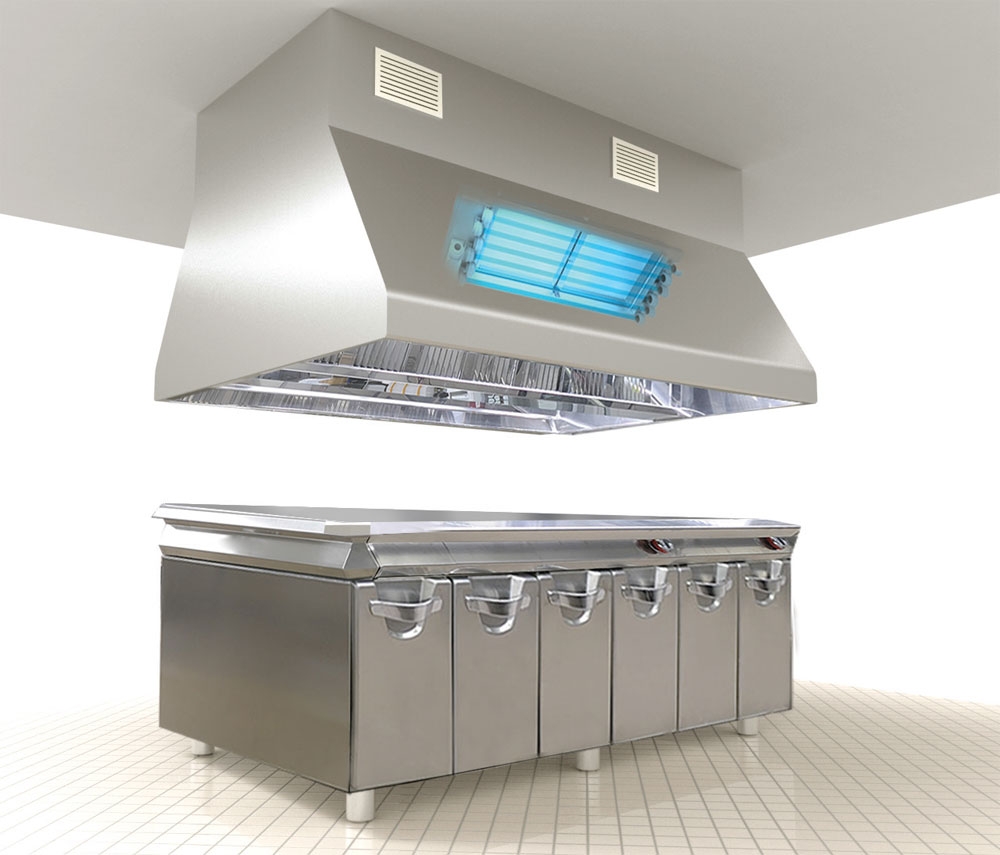
UVC germicidal lamps provides several advantages to UV lights in commercial kitchen hood exhausts have the added benefit of assisting in the breakdown of grease and the prevention of grease accumulation. UV radiation induces a chemical reaction that changes the organic components in grease and inhibits grease accumulation in the kitchen hood exhaust system through a process known as ozonolysis.

There are several types of air sterilization systems that may be placed in any residential, commercial, or industrial structure. UV air filtration is extremely successful in eliminating hazardous airborne viruses, and UV HVAC systems assist in automatically cleaning and purifying the air.

UVC lamps are particularly efficient in water disinfection because they kill some hazardous germs that chlorine does not. UV light sterilizes liquids in the food and beverage industries, such as sugary syrups and liquid sweeteners, which can serve as a breeding ground for hazardous microbes.
UV light is frequently utilized in the food and beverage processing sector to eradicate hazardous germs in a range of applications.
Lumina UV este utilizată pe scară largă în sectorul alimentar, deoarece este pe deplin sigură, necesită puțină întreținere și nu necesită utilizarea de substanțe chimice sau pesticide. Razele UV au capacitatea de a eradica cu succes viruși precum E. Coli și Salmonella, precum și multe alte bacterii care provoacă degradarea alimentelor. Lampile germicide UVC servesc, de asemenea, la reducerea infestărilor de insecte în fructe și legume, precum și la introducerea în țară a insectelor din alimente importate.
Lămpile UVC germicide ucid o gamă largă de viruși și bacterii, mucegaiuri și spori, precum și ciuperci și drojdii. Începând cu 1963, FDA a permis utilizarea iradierii alimentelor pentru tratarea drojdiei și făinurilor pentru a evita infestarea cu insecte.
UV radiation sterilization of food enhances food safety, extends shelf life, eliminates foodborne diseases, controls insects, and even stops potatoes and onions from sprouting prematurely. Germicidal UVC lamps are used in a variety of applications for food safety, including:

In addition to making food safer, UV lights provide a number of advantages in the food sterilization process. The following are some of the most significant advantages of UV light food sterilization:
Source:
LightSources
23.02.2022
Ultraviolet (UV) systems for disinfecting water comprise several crucial parts that keep them running...
02.10.2021
Let's immediately clarify our ideas, with the terminology "sick" we don't mean the building, but the...
Contact Us
Do you need any help? Write to us here and we'll get back to you as soon as possible.