
04.03.2020
Keeping the hood clean and hygienic allows you to prevent and eliminate the annoying efficiency problems of the entire ventilation system and at the same time ensure the maintenance of a low risk of fire.
In addition to the risk of fire, the problems related to the smells produced by cooking food represent an increasingly common problem. The responsible substances are mainly fatty acids, aliphatic and aromatic hydrocarbons, aromatic amines and aldehydes. The type and quantity of pollutants emitted depend mainly on the type of cooked product, the cooking methods and the means used for cooking. There are many ways to filter odors, but there are no specific rules on "olfactory pollution". Odor is a complex phenomenon to be understood not only for the wide range of potentially odorous substances, but above all because the ability of a substance to be perceived by our olfactory system depends on several objective aspects (volatility, solubility in water, etc. ) than subjective (physiological and psychological of the observer) but can also involve the environment (temperature, pressure, relative humidity of the air, wind speed and direction). This means that the same substance, at a distance from the source, is perceived differently by different people. The odorigenic compounds can constitute an important point of friction between the restaurant / hotel / hotel / catering and the surrounding environment, as the smells are able to spread in large areas without anyone can perform decisive interventions to contain it by avoiding exhalation of the people involved.
UV technology is the most effective way to eliminate fats in kitchen hoods.
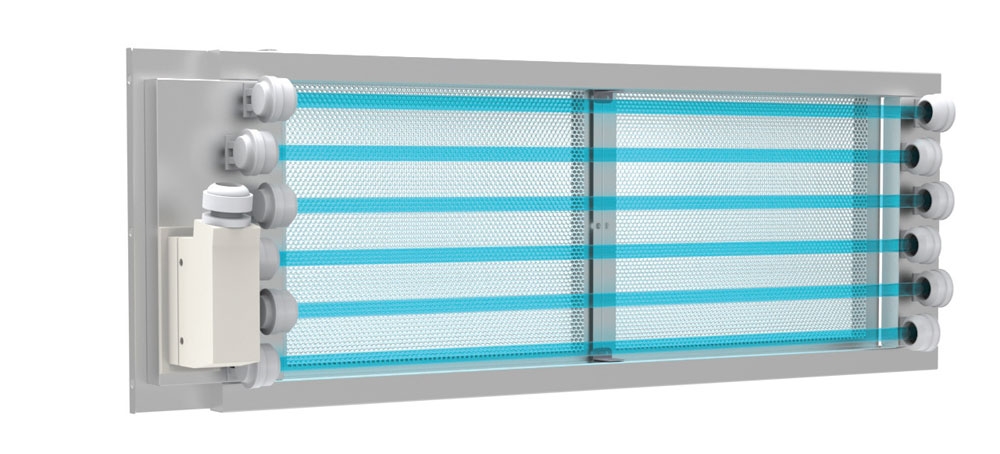
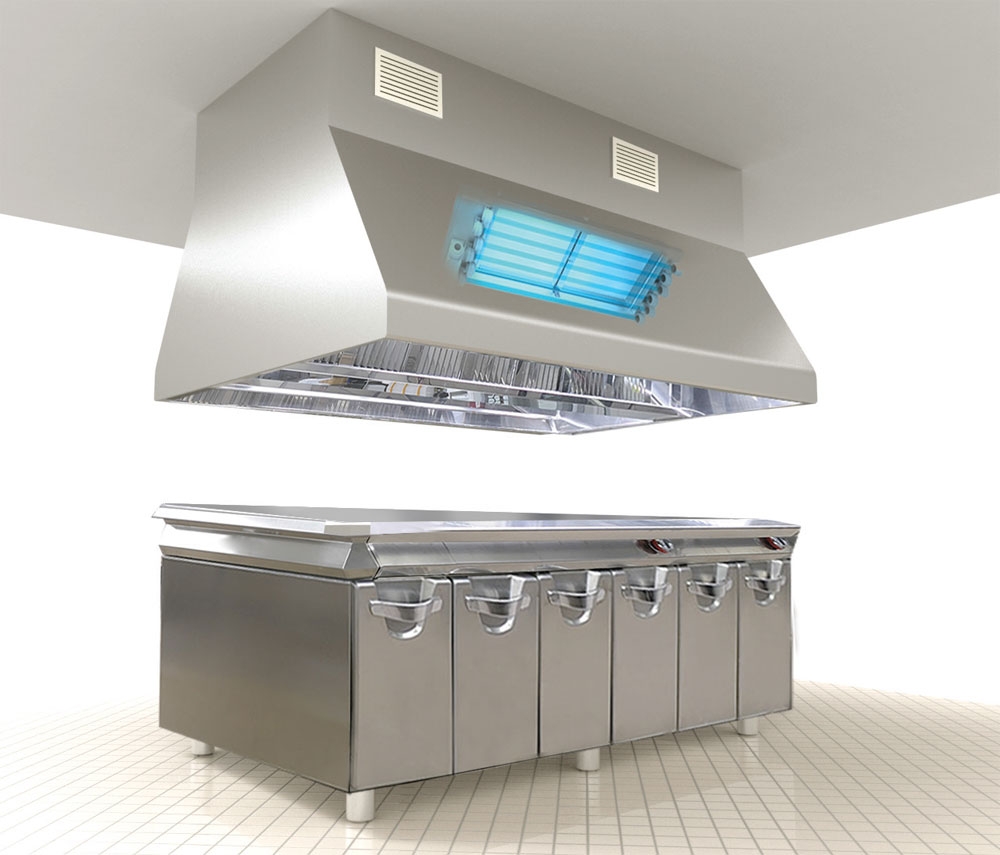
 UV-SMELL-SQ placed in the hood
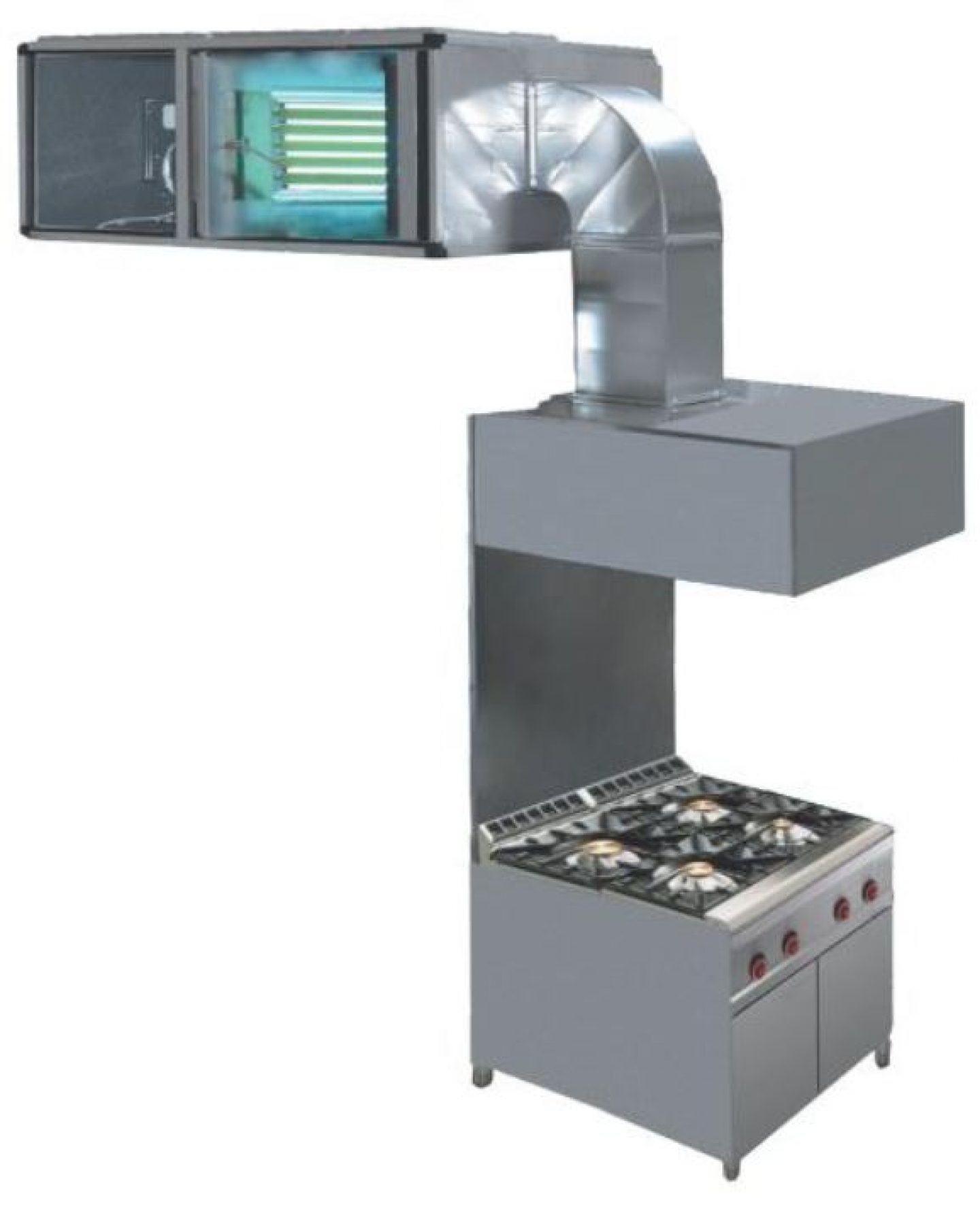
The ideal ventilation system in a large professional kitchen should include a portion containing UV lamps, possibly together with filtration systems of titanium dioxide (TiO2) and silver salts. For the maintenance of cleanliness and a prolonged effect on the elimination of odors, it is often necessary to consider the application of UV lamps in combination with the emission of Ozone. Applied inside kitchen hoods and aspiration systems, UV-SMELL contributes significantly to minimize these problems.
 UV-SMELL-SQ
UV lamps are mercury vapor lamps that emit the specific wavelength of the C band (UV-C), capable of breaking the bonds of fatty compounds by breaking them down into simpler molecules. (H2O, CO2, etc.) creating what is scientifically called "cold combustion". Some of these lamps are made of a special transparent quartz with a wavelength of 180 nanometers, capable of "transforming" the Oxygen molecules into Ozone (O3) molecules. The ozone properties are ultra clean and persistent over time; ozone is in fact a highly unstable molecule, which tends to quickly turn back into oxygen. However, the application in kitchen ventilation channels is very effective in eliminating odors precisely because ozone is able to "follow" the odors along the ducts, eliminating them before they are released outside.
As soon as ozone comes into contact with an organic matter, an oxidation reaction is triggered. Basically, the molecules are oxidized, transformed into harmless molecules, thus eliminating any form of bad smell. In addition, titanium dioxide has a specific action on the elimination of VOCs and NOCs (organic and non-organic flying compounds) as it acts as a catalyst capable of degrading numerous organic compounds. By exploiting its properties, we are able to destroy the deposited organic compounds and activate its self-cleaning and polluting capacities. When applying this type of system, the only precaution is to mount it downstream of mechanical filters that micronize the fat molecules such as common mesh or labyrinth filters.
The advantages of using UV-SMELL
Benefits of using UV-SMELL
In addition to those just listed, great advantages can be found above all with the combination of different technologies, obtaining improvements for the management of the entire ventilation in the kitchens.
There are different ways of applying UV, UV + Ozone and UV + Ozone + Ozone + Titanium dioxide filters. Once the specific situation has been analyzed, it is important to consider these essential points:
Source: www.lightprogress.it/en
02.06.2020
Air disinfection inside community structures (schools, hospitals, offices) is very important, this allows...
24.02.2020
The importance of hospital disinfection for controling the spreading of infections UV light exposure...
Contact Us
Do you need any help? Write to us here and we'll get back to you as soon as possible.